Trinidad
A perfectly preserved colonial time capsule - a UNESCO town of cobbled streets and pastel houses frozen in the era of the sugar boom, alive with music, near the Caribbean and forested mountains.
Saved in this browser only - no account, nothing sent anywhere. See your map
UNESCO World Heritage
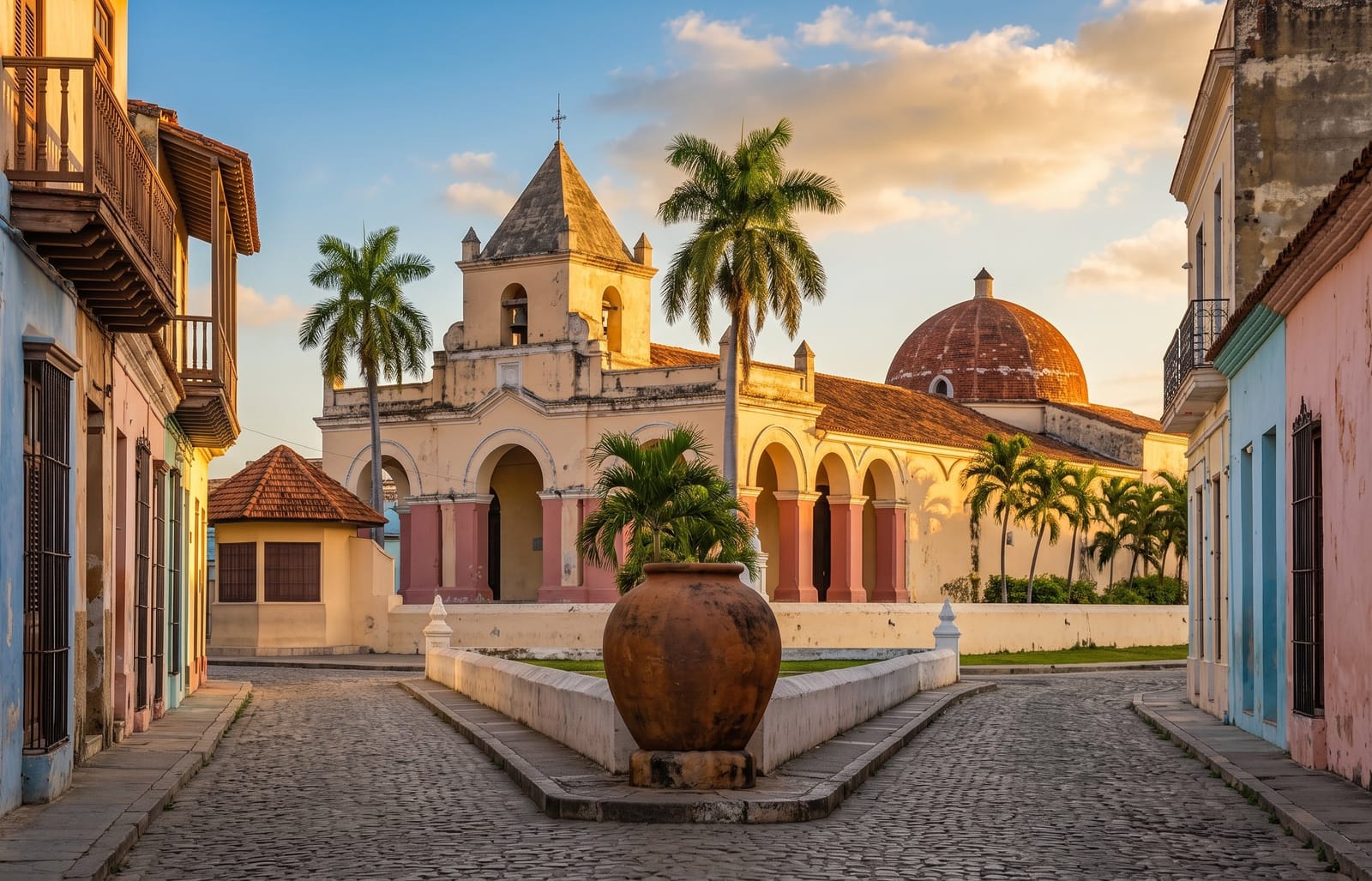
Trinidad is the best-preserved colonial town in Cuba, a UNESCO gem in the centre of the island that grew rich on sugar in the eighteenth and nineteenth centuries and then, as the industry declined, was left frozen in time. Its cobbled streets, pastel-painted houses with wrought-iron grilles, grand mansions and central plaza feel like a living museum, alive with live music spilling from its casas, and set between the Caribbean coast and the forested Escambray mountains.
What you actually see
- The Plaza Mayor - the beautiful central square and its church.
- The cobbled streets - the pastel houses and colonial mansions.
- The Casa de la Musica - the steps where live music plays at night.
- The Valley of the Sugar Mills - the historic plantation valley nearby.
When to go
November to April, the dry season, for the best weather; the town is atmospheric year-round, with music every evening. It combines a colonial town, the nearby Playa Ancon beach and the Escambray mountains for a varied few days.
Honest expectations
The cobbled streets are charming but genuinely uneven and hard on the feet and wheels. Like all of Cuba, it faces shortages and logistical challenges, so cash and patience are needed. It has become touristy and the touts work the plaza, but staying in a family casa particular gives a warm, authentic experience. Its preservation and music are the real draw.
Nearby
Playa Ancon beach, the Escambray mountains and the city of Cienfuegos are close.
What to pack for Trinidad
Chosen from what this place is for. Tap a kit for the full checklist.
Opening times, ticket prices and seasonal closures change - check the official source before you go: official site.