Seaplane Harbour
A 1917 seaplane hangar in Tallinn holding a real submarine you can climb inside - the rare maritime museum that works even for people who do not like museums.
Saved in this browser only - no account, nothing sent anywhere. See your map
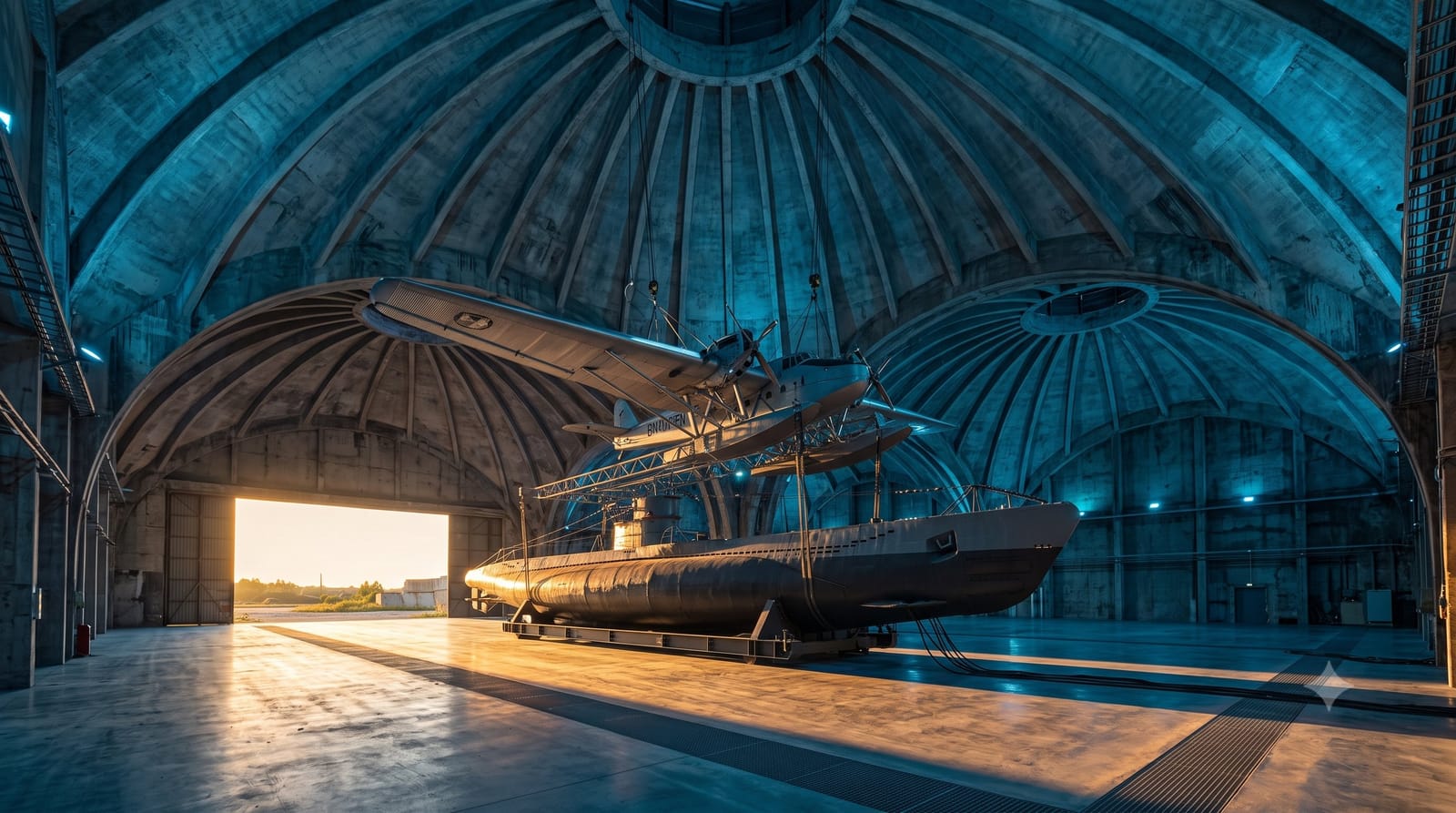
Illustrative image - a scene in the spirit of the place, not a photograph of it. Real photos are below.
Lennusadam, the Seaplane Harbour, is housed in a concrete seaplane hangar built in 1917 for the Russian imperial navy. The building alone is worth the walk: three enormous shell domes, unsupported by internal pillars, restored after decades of dereliction. Inside sits the collection of Estonia's maritime museum, arranged on and around the water.
What you actually see
The centrepiece is Lembit, a British-built submarine from 1936 that served the Estonian navy and then the Soviet fleet, and which you can walk right through - narrow, low and completely intact, from the torpedo room to the engines.
Around it: a replica Short 184 seaplane hanging from the dome, an icebreaker's steam engine, historic small craft, mines, ship models and a good hands-on section for children. Outside on the quay is the steam icebreaker Suur Tõll, which you board separately and which is arguably as interesting as the hangar.
When to go
It is indoors and open all year, which makes it the obvious wet-weather option in a city with plenty of those. Weekday mornings are calmest; summer afternoons and cruise days can be busy around the submarine, where the queue is a bottleneck by design - only so many people fit inside at once.
Honest expectations
Two to three hours is right for most people; naval enthusiasts will want longer, and small children usually run out of patience after the submarine and the simulators. The submarine interior is genuinely tight, with steep ladders and high door sills, so it is not accessible to everyone and not for the badly claustrophobic. Suur Tõll on the quay is a separate boarding and has its own steep stairs.
Nearby
The walk from the old town runs through Kalamaja, the wooden-house district, which is worth the detour on its own; the Balti Jaam market sits between the two.
What to pack for Seaplane Harbour
Chosen from what this place is for. Tap a kit for the full checklist.
Opening times, ticket prices and seasonal closures change - check the official source before you go: official site.